
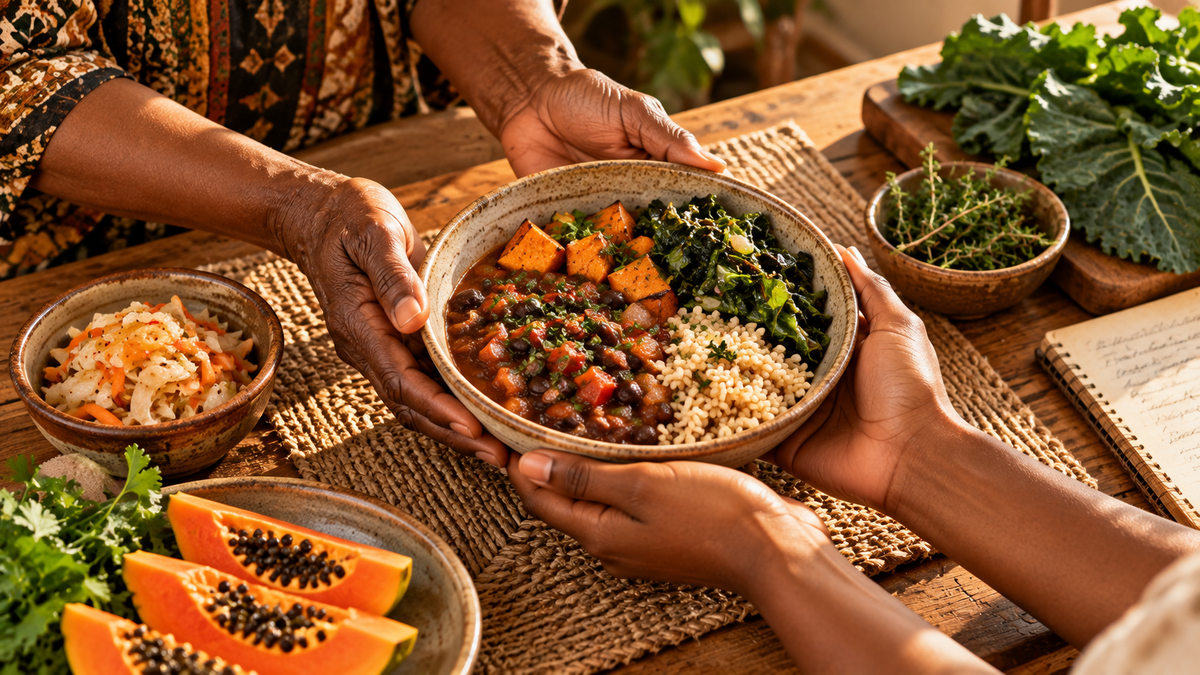
There is something familiar about a pot simmering on the stove. The smell of a meal you grew up with. The sound of someone in the kitchen telling you to sit down and eat. Sometimes, reconnecting with yourself begins in these ordinary places, where nourishment carries a memory of being cared for.
Food can connect us to the people who came before us, to the land that sustained them, and to the traditions they carried forward. Caring for our digestive health gives that connection a place in our daily lives. It asks us to pay attention to how we receive nourishment and how we feel in our bodies.
At Wholistic Harmony Herbs, we see this attention as part of coming home to yourself. You can begin with the next meal and a little more willingness to listen.
How digestion nourishes the whole body
Your digestive system turns food into nutrients your body can absorb and use for energy, growth, and cell repair. The process begins in your mouth, where chewing and saliva start breaking food down. Your stomach continues the work, and your small intestine absorbs most of the nutrients. Your liver, pancreas, and gallbladder help along the way. The large intestine absorbs water and helps form the waste your body releases.
Bacteria living in the digestive tract also help with digestion. Nerves and hormones coordinate the process, including signals that travel between your gut and your brain.
So much happens beneath the surface of a simple meal. A bowl of beans, a piece of fruit, or a serving of vegetables becomes nourishment through this ongoing work. Understanding that process can deepen our appreciation for the body we live in and the care it needs.
Remembering the foods that connect us
Think about the foods that hold a place in your family story. Perhaps it is rice and peas, a pot of lentils, greens prepared a particular way, or a soup someone made when you needed comfort. The recipe may have crossed an ocean. It may have changed with each generation, shaped by what was available and what a family could afford.
There is room to honor those foods while learning what nourishes you today. An ancestral approach can begin with curiosity: Who taught us to prepare this? Where did these ingredients come from? What do we want to carry forward?
If those stories were never passed down to you, you can still explore. Ask a relative about a dish they remember. Learn about an ingredient connected to your heritage. Cook something slowly enough to notice its texture and scent. Let reconnecting be a practice you grow into, without pressure to recover every missing piece of your history.
The nourishment in a complete meal
Food contains combinations of nutrients and other compounds that interact. This idea, sometimes called food synergy, encourages us to consider whole foods and the overall pattern of our meals. A varied diet offers nourishment that is difficult to understand by looking at a single nutrient alone.
Some combinations also help the body make use of what we eat. Vitamin C from citrus can improve absorption of the iron in plant foods, such as spinach. Olive oil can help with the absorption of lycopene, a compound found in tomatoes. Beans and brown rice bring together fiber and complementary proteins. Apple slices with nut butter combine fiber, fat, and protein for a more satisfying snack.
These pairings are possibilities to enjoy. You can eat an orange by itself or prepare greens with whatever you have in the kitchen. Let knowledge make your meals more nourishing and enjoyable, while leaving room for your tastes, needs, and budget.
There is a quiet pleasure in building a meal from familiar ingredients. You get to bring inherited recipes into conversation with what you are learning about your own body.
Honoring the work your body does during rest
As the house grows quiet and you settle into sleep, your body continues its work. Sleep supports the repair of cells and tissues. Your kidneys keep filtering waste from your blood, and the processes that sustain you continue beyond the night and into the day.
Rest deserves a place beside nourishment. Allowing yourself enough sleep is one way to care for the body that carries you through your life. You might build an evening ritual around dimming the lights, putting your phone away, and letting the day come to a close.
The body’s repair and waste removal follow ongoing processes, rather than a cleansing window that ends at noon. Your morning meal can fit your health needs and daily rhythm. You can honor rest and still nourish yourself when you wake.
Exploring fasting with care
For some adults, intermittent fasting offers a way to give meals a more consistent rhythm. It means alternating periods of eating with periods without calories. One common approach is a 16-hour fast followed by an eight-hour eating window. Studies suggest that fasting may help some people with weight management and aspects of metabolic health, including blood sugar control. Some people choose to extend their overnight fast until noon. Whether that rhythm supports you depends on your health, medications, and nutritional needs.
Scientists are also studying its relationship to autophagy, a process through which cells break down and recycle damaged components. The timing and benefits of fasting-induced autophagy in humans remain uncertain. Sixteen hours is not a proven switch that renews every cell, and fasting does not create an entirely new body.
If you are curious about fasting, speak with a healthcare professional about whether it suits you. It is generally inappropriate during pregnancy or breastfeeding, for children and teens, or for people with a history of eating disorders. Diabetes and medications can require particular caution. Longer fasts are not automatically more beneficial.
Let the practice begin with care for your actual needs. You can create a thoughtful relationship with food through regular, nourishing meals whether or not fasting becomes part of your life.
Returning to nourishment from the earth
A diet centered on whole plant foods can bring us closer to ingredients we recognize and traditions we want to preserve. Greens, beans, whole grains, fruit, nuts, and seeds offer many ways to build satisfying meals. We encourage making these foods a generous part of your plate, prepared in ways you enjoy.
For people reconnecting with African and Caribbean heritage, plant-centered meals can also hold cultural meaning. Leafy greens, peas and beans, roots, fruit, and grains have a place in many food traditions across the African diaspora. Preparing these ingredients can be a way to explore your roots while nourishing yourself today.
Melanated people have varied ancestries and individual nutritional needs. Skin pigmentation does not establish one ideal diet. We can celebrate the place of plant foods in our heritage while making room for the different ways people eat and thrive.
Choosing organic foods, when available and affordable, may align with your values around farming and care for the land. Organic describes how food is produced; the label alone does not guarantee a more nourishing meal. Let your care for the earth guide your choices without making nourishment dependent on an expensive grocery bill.
If you choose a fully plant-based diet, plan for enough protein and key nutrients, especially a reliable source of vitamin B12 from fortified foods or supplements. Thoughtful nourishment includes making sure the body receives what it needs.
Making space to listen
Many of us have learned to eat while answering messages, standing at the counter, or moving toward the next obligation. We may finish a meal without remembering much about it.
When you can, give yourself a few minutes to sit down. Notice the first bite. Chew with attention. Pause long enough to recognize whether you are still hungry or comfortably satisfied. Keep water within reach. These small choices can create space for a relationship with your body that feels less hurried.
If fruit appeals to you for your first meal, enjoy it in a way that feels comfortable. Adding nut butter or another protein source can make it more satisfying. Fruit still requires digestion, and how easily it agrees with you depends on the fruit and your own body. Give yourself permission to choose a different meal when that serves you better.
You might begin noticing which meals feel comfortable and which leave you feeling unwell. Approach those patterns with curiosity. Your needs may differ from someone else’s, even someone in your own family. Persistent discomfort deserves attention from a healthcare professional; seeking care can be part of honoring what your body is telling you.
Listening also means allowing yourself to eat without guilt. Ancestral reconnection should feel welcoming. Make room for pleasure, convenience, and the reality of the life you are living.
Returning through everyday care
Coming back to your true self can happen while washing greens, stirring a pot, or preparing a meal from a recipe you thought you had forgotten. It can happen when you finally sit down and give yourself the care you so readily offer everyone else.
Our ancestors left many kinds of inheritance. Some are held in recipes and stories. Others survive in the small gestures of care we recognize without knowing where they began. We can honor that inheritance by tending to the bodies and lives we have now.
Digestive health belongs in that everyday care. At your next meal, take a moment to notice what is on your plate and how you feel as you eat. Remember someone who fed you with love. If you can, prepare something that connects you to them.
Let that be a place to begin returning to yourself ✨